Fate and personal responsibility
Out Stealing HorsesFate and personal responsibility are held in unresolved tension: the novel shows how accidents can feel predetermined, while insisting that their causes and consequences remain bound to human choices. Its characters reach for fate, deny it, or accept blame, but no interpretation can reverse what has happened. The older narrator’s account makes this tension a problem of memory as well as morality: events can acquire the shape of destiny in retrospect even when their original causes were contingent.
The Accident and the Language of Fate
The tension is clearest in the childhood accident that kills Odd. The twins have spent the morning playing with discarded clothes and worn shoes. When they run upstairs, they find Jon’s gun beside the hanging hares. Jon is their admired older brother, and his actions readily become material for imitation. Lars reaches the gun first, wants to play at being Jon, and fires it without aiming. The shot kills Odd. The sequence is accidental, but its consequence is irreversible.
The narrator’s recollection places two explanations beside each other. A western-like account could make Odd’s death seem written in the stars, as if no action could have altered the fatal alignment. But the narration explicitly rejects that as the truth of the matter: Jon knows that the event was not governed by an inexorable design. The only record in which Odd’s name cannot be erased is the church register. This image gives the death a formal finality without claiming that it was fated. The contrast matters: the record confirms what happened, not that it had to happen.
Even the telling of the accident is shaped by uncertainty. The narrator says that his father could not have supplied all the remembered details and wonders whether the scene was filled out immediately or reconstructed over years. He distinguishes this imaginative completion from the uncontested fact of the death. Memory may arrange a catastrophe into a legible story, but that arrangement does not settle whether the event was inevitable. The novel thus treats retrospective pattern-making as a temptation, not proof of destiny.
Choosing Against Fatalism
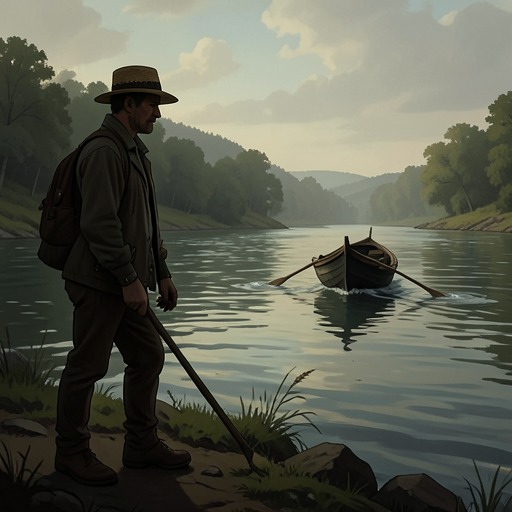
As an older man, the narrator confronts a different kind of apparent pattern when he realizes that the neighbor he has passed on the road is Lars, whom he last saw as a child. The coincidence seems implausibly neat, more like the design of an older novel than an event in his own life. He associates Dickens with stories in which disturbances are finally balanced and everything comes together, but rejects the idea that such an order governs his world. He insists instead that people shape their lives and that he accepts responsibility for the shape of his own.
That declaration is immediately complicated by circumstance. Of all the places he might have moved, he has settled near Lars. The recognition does not change his plan: he intends the remote home to be his final one, and would prefer Lars not to recognize him. Still, the coincidence makes a difference to him. The episode does not prove that their lives have been directed toward a reunion; it exposes how difficult it is to keep a firm belief in self-determination when the past resurfaces in precisely the place where it can be encountered.
Franz offers a sharply different response to uncertainty. During the summer’s timber work, he declares his willingness to accept whatever Fate brings. His exuberant language accompanies dangerous, strenuous labor, while the narrator’s father responds with a smile and a shake of his head. Franz’s stance is not presented as a settled explanation of events. It is a posture of welcome toward risk, in contrast to the narrator’s later insistence that people remain answerable for the lives they make.
Responsibility Between Adults
After a day when the adults’ conduct has, in the father’s judgment, become needlessly risky, he tells the narrator that he should have stopped matters earlier. He stresses that this was within his power, calls the outcome his fault, and describes what happened as unforgivable. His admission treats responsibility as a question of agency: even if another person participated, he believes that his own position gave him the ability and obligation to intervene.
The narrator does not find the admission simple or wholly reassuring. He resents being left out of the allocation of blame; if his father bears responsibility, he feels that he may bear some too. The father’s effort to take fault therefore has two effects. It acknowledges the power to prevent harm, but it also risks denying the narrator’s own part in events. The exchange makes responsibility relational rather than merely private: accepting blame can be morally serious and still leave another person feeling diminished or unheard.
Inheritance, Departure, and Uncertainty
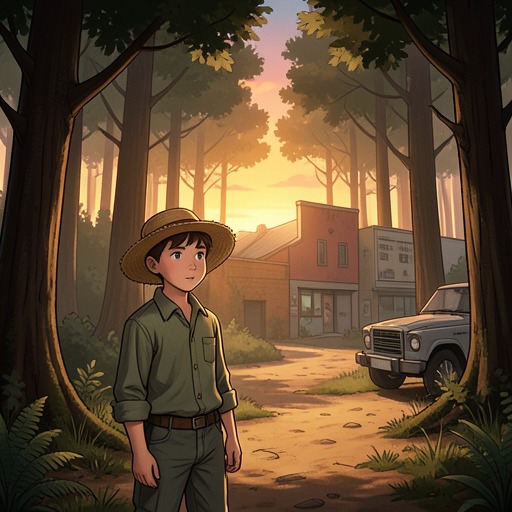
At the end of the summer of 1948, the father gives the fifteen-year-old narrator practical instructions for the journey home, including where to leave the train at Elverum. He advises him to learn from what has happened, remember it, and avoid becoming bitter. The narrator answers that he understands, but recognizes that hearing advice is not the same as grasping its meaning. The counsel offers a way to live with painful consequences without turning them into either a grievance against fate or a reason to surrender responsibility.
The farewell then makes the distinction between choice and circumstance impossible to resolve. The father says he will finish up and follow, as he has said before. The narrator feels that something is wrong and later wonders whether his father already knew he would not return, or whether something beyond his control intervened. He boards the bus, watches his father disappear from view, and remembers the moment as a decisive parting. The scene does not provide the answer that would turn uncertainty into certainty. Instead, it leaves the promise and the separation together: the past can be revisited and interpreted, but the narrator cannot establish whether the ending was chosen or imposed.
Across these episodes, fate is neither wholly affirmed nor comfortably dismissed. The accidental death resists the consoling claim that everything was written in advance; Franz’s defiance makes acceptance a possible stance rather than a proof; and the father’s remorse locates moral weight in the actions people could have taken. The narrator’s later coincidences and unresolved farewell, meanwhile, show why the language of destiny keeps returning. The novel’s ethical emphasis falls not on mastering outcomes, but on recognizing agency where it exists and living honestly with what cannot be known or undone.